A wearable alarm comparison is most useful when it starts with real life, not just features. For a child who is sleeping through wet nights, the right alarm needs to be sensitive enough to respond promptly, comfortable enough to wear consistently and simple enough that the whole household can follow the routine without adding stress.
Bedwetting alarms are a treatment tool rather than a quick fix. They are designed to help the brain learn to recognise a full bladder and wake before a full wetting happens. That learning takes time, and the best choice depends on your child’s sleep, confidence, sensory needs and the support available at home.
Wearable alarm comparison: what is being compared?
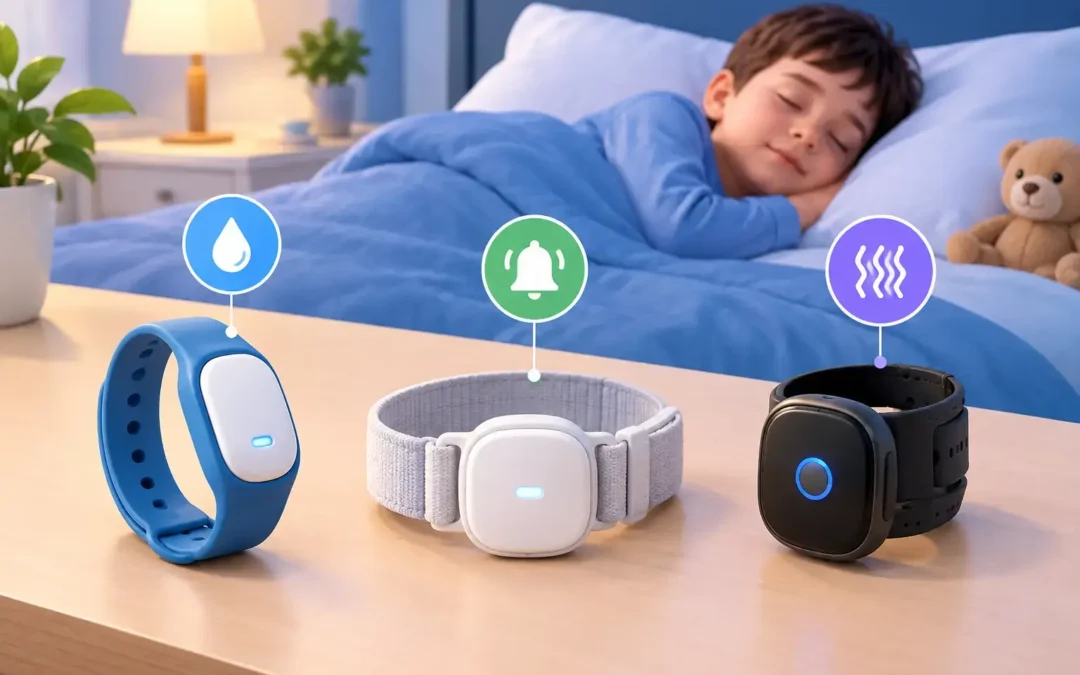
The term wearable alarm can describe several styles of bedwetting alarm. Most use a small moisture sensor placed in underwear and an alarm unit that vibrates, sounds or does both when the sensor detects the first drops of urine. The key differences are where the sensor sits, how the alert reaches the child and how easily the system fits into a night-time routine.
A traditional body-worn alarm usually has a wired sensor clipped to the front of ordinary underwear, with the alarm unit attached to pyjamas. A wireless system separates the sensor and alarm, allowing the child to wear a small sensor in compatible underwear while the alert unit sits elsewhere in the room. Some systems also connect to an app, giving parents a clearer record of progress over several weeks.
None of these formats is automatically right for every family. A simple wired alarm may suit a child who wants the fewest components. A wireless design may be more comfortable for a child who moves a lot in sleep or dislikes a wire against their skin. The practical question is whether the system can be used correctly and consistently, night after night.
Wired wearable alarms
Wired alarms are often the most familiar option. The moisture sensor clips into underwear and connects by a lead to a small alarm unit worn on the top. When the sensor becomes wet, the unit alerts the child.
Their main advantage is simplicity. There is no need to pair separate components, and families can usually see immediately whether the sensor is correctly positioned. They can also be a sensible choice where cost is the first consideration.
The trade-off is that a clipped sensor can shift during active sleep, while a wire may catch, pull or feel bothersome to some children. Placement matters a great deal: the sensor needs to be where the first moisture is likely to reach it, not loose in fabric or placed too far to one side. If the clip loses contact or the child finds the setup uncomfortable, false alarms and missed alarms can make treatment harder to sustain.
Wireless and sensor-underwear systems
Wireless wearable alarms generally place the sensor within purpose-designed underwear, while an alarm unit alerts the child or parent nearby. The sensor can sit more securely than a clip attached to ordinary pants, which may help children who wriggle, sleep deeply or find wires distracting.
Specialised alarm underwear can also make the routine feel more discreet and straightforward. Rather than clipping a device into place each evening, the child puts on underwear designed to hold the sensor in the correct area. This can support independence, particularly for older children who do not want a parent to manage every step.
However, wireless does not always mean effortless. Check how the components charge, whether the system needs pairing, how far the signal reliably reaches and what happens if the child sleeps in a different room. A unit that sounds near the child may be enough for some families; others need a parent alert because the child does not wake easily at first.
Sound, vibration and parent alerts
An effective alarm must wake the child, not merely wake everyone else. This is why alert options matter more than a long list of settings.
Sound is often the clearest prompt to get up, visit the toilet and reset the alarm. Vibration can be useful for children who share a room, are sensitive to noise or respond better to a physical prompt. Many families value an alarm that combines both, especially during the early weeks when a child may sleep through the first alert.
A parent alert can offer reassurance, but it should support learning rather than replace the child’s involvement. If a parent wakes, they can calmly help their child finish in the toilet, change if needed and reset the system. Over time, the aim is for the child to notice the signal and take those steps with increasing independence.
Consider the household, too. In a shared bedroom, a loud bedside alert may disturb siblings. In a larger home, a quiet vibration alone may not provide enough reassurance for parents. The most suitable option is the one that balances the child’s dignity with a reliable response.
Comfort and fit are treatment features
It is tempting to see underwear and sleepwear as accessories to the alarm. In practice, comfort affects whether treatment continues long enough to work. It is difficult for any child to stay motivated if a sensor rubs, a clip presses into the skin or the setup feels noticeably different from normal bedtime clothing.
Look for soft, washable materials and a fit that keeps the sensor steady without feeling restrictive. The child should be able to get dressed, use the toilet and reset the system with age-appropriate help. If they are anxious about friends staying over, school trips or holidays, discreet components can make a meaningful difference to their confidence.
For some families, absorbent treatment trousers are helpful alongside an alarm. They can contain a wetting while allowing the sensor to detect moisture, reducing the disruption of changing bedding at 2 am. This is different from relying on absorbent protection alone: protection manages tonight, while an alarm programme is intended to build towards lasting dry nights.
Tracking progress: helpful, but not essential
An app-connected alarm can record wet and dry nights, alarm events and patterns over time. This can be useful when progress is gradual. A child may begin by waking only after the alarm, then wake earlier, then have smaller wettings, before dry nights become more regular. Without a record, those meaningful changes are easy to miss.
Digital tracking may also help parents share clear information with a continence nurse or paediatric team. Where clinical support is involved, a structured record can make follow-up conversations more focused than trying to remember several weeks of disrupted nights.
That said, an app is not essential for every household. If another login, charging routine or notification adds pressure, a simple paper record can work well. Choose tracking that helps your family notice progress, rather than making bedwetting feel like a test your child can fail.
Questions to ask before choosing a wearable alarm
Before purchasing, think beyond the alarm’s headline features. Ask whether the sensor is designed for ordinary underwear or needs compatible garments, how the equipment is cleaned, whether replacement sensors are available and whether the alert has adjustable volume or vibration. It is also worth checking how parents are alerted, how the system is powered and whether there is practical guidance for the first few weeks.
The right treatment plan should explain what to do when the alarm sounds, not just provide a device. Families need a calm, repeatable response: wake the child, go to the toilet, change any wet clothing or bedding, reset the sensor and offer encouragement in the morning. Punishment, embarrassment and disappointment do not help learning.
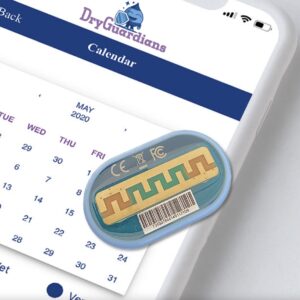
Pjama DryGuardians brings together an alarm, sensor-compatible underwear, optional absorbent treatment trousers and digital progress support for families who want a more structured pathway. For others, a straightforward wearable alarm with consistent family support may be the best place to begin.
When an alarm may need extra support
Alarm treatment asks a lot of tired families, so timing matters. It tends to work best when a child wants to try, a parent or carer can help at night initially and the household can give the routine several weeks. It may be sensible to pause around a major family change, illness or a particularly demanding school period.
Speak to a healthcare professional if bedwetting begins suddenly after a child has been dry for a long time, if there are daytime wetting symptoms, constipation, pain when passing urine, excessive thirst or concerns about development and wellbeing. A continence service can help identify whether an alarm is appropriate and provide a more personalised plan.
The most valuable wearable alarm is not necessarily the smallest, loudest or most technical. It is the one your child can wear with comfort and dignity, and that gives your family a realistic routine to follow. Each calm response to an alarm is a step towards greater confidence at bedtime.