
Enuresis care often depends on what happens between appointments. Families may be asked to observe patterns, maintain routines, record wet and dry nights, and return with enough detail for the next clinical decision. In practice, that information can be difficult to collect consistently, especially when families are tired, embarrassed, or unsure what is clinically relevant.
This is where digital follow-up enuresis workflows can offer practical value. Not as a stand-alone treatment, and not as a replacement for clinical judgement, but as a structured way to support monitoring, communication, and more individualised support within broader guideline-based care.
For healthcare professionals, clinic managers, and decision-makers, the question is not simply whether digital tools are convenient. The more important question is how structured tracking can fit responsibly into care pathways, reduce information gaps, and help clinicians understand progress over time.
Why follow-up matters in enuresis care
Enuresis is rarely understood from a single consultation alone. Whether care involves assessment, advice, alarm treatment, medication, behavioural support, or watchful waiting, progress is usually evaluated over weeks rather than days. Clinicians often need to know whether nights are becoming drier, whether wetting frequency is changing, whether the child or adult is waking, whether treatment is being used consistently, and whether the current plan remains appropriate.
Traditionally, this has relied on paper diaries, verbal recall, or brief notes from families. These can be helpful, but they also have limitations. Records may be incomplete. Families may remember the most stressful nights more clearly than the overall pattern. Appointments may focus on general impressions rather than structured review. In busy services, these gaps can make it harder to tailor care with confidence.
Structured enuresis treatment monitoring helps create a clearer picture. When information is logged consistently, clinicians can review trends rather than isolated events. This supports more focused conversations and may help identify when a plan needs adjustment, reinforcement, or simply more time.
From diary data to clinical insight
A digital bedwetting diary can support the same basic purpose as a paper diary: recording what happened and when. The difference is that digital systems can make the information easier to view, summarise, and share where appropriate. This can be particularly useful when follow-up is remote, when appointment time is limited, or when several professionals are involved in care.
Useful data points may include:
- Wet, dry, or partially wet nights
- Frequency and timing of incidents where this is recorded
- Whether the person woke independently or needed support
- Use of agreed treatment tools or routines
- Changes over defined time periods, such as four weeks
- Notes from families about relevant circumstances, where clinically appropriate
The value is not in collecting data for its own sake. The value is in helping professionals ask better questions: Is the pattern changing? Is adherence realistic for this family? Is the response consistent with expectations? Is the current plan still aligned with the person’s needs, motivation, and circumstances?
Supporting individualised enuresis treatment
Individualised enuresis treatment depends on understanding both clinical response and lived reality. Two patients may have similar wetting frequency but very different support needs. One family may be managing the routine calmly, while another may be experiencing high stress, disrupted sleep, or loss of confidence. One adult may prioritise privacy and independence; another may need support around treatment adherence or underlying concerns.
Digital follow-up can support individualisation by making progress visible in a more concrete way. For example, a child using an alarm may not yet be dry, but the record may show fewer very wet nights or earlier waking. A family may feel that nothing is improving, while the trend suggests gradual change. Conversely, a diary may show little change after a sustained period, helping clinicians consider whether a different approach, a pause, or further assessment is appropriate.
This kind of data-driven enuresis care should remain proportionate. The aim is not to over-medicalise family life or increase pressure on the person experiencing wetting. The aim is to reduce uncertainty, support shared decision-making, and help care feel more responsive.
Where digital follow-up can fit in the clinical workflow
For clinics, digital tracking may be most useful when it is embedded into a clear workflow rather than offered as an optional extra with no defined review process. Practical use cases include:
Before the first or follow-up appointment
Structured logging can help families arrive with more complete information. Clinicians can review trends before or during the consultation, making the discussion more specific and less dependent on memory.
During active treatment
When a treatment plan requires consistency over several weeks, digital records can help monitor use, progress, and barriers. This may support timely encouragement, clarification, or adjustment when needed.
Between appointments
Service-connected tracking, where consented and appropriately governed, can allow professionals to follow progress remotely. This may help services prioritise follow-up, identify when families need support, and avoid unnecessary delay when a plan is clearly not working as expected.
For service planning
Aggregated, responsibly handled data may help clinics understand demand, follow-up timing, adherence challenges, and resource needs. Any such use should follow applicable privacy, consent, and data protection requirements.
A practical example: Pjama Healthcare and the DryGuardians App
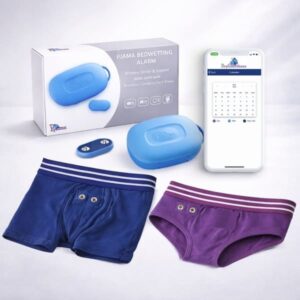
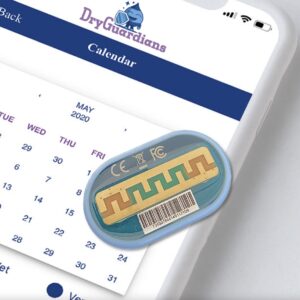
Pjama Healthcare and the DryGuardians App provide one example of how structured digital follow-up can be integrated into enuresis care. The app allows users to log nightly results, follow progress over time, and use a calendar-style overview to support treatment monitoring. In healthcare-connected settings, clinicians can access structured summaries through the DryGuardians Portal, communicate with patients, and review progress remotely where this is part of the agreed care process.
This type of tool can support a more organised follow-up conversation. For instance, rather than asking a family whether things are better in general, the clinician can review recorded wet and dry nights, discuss waking patterns, and explore whether the current routine is manageable. The data does not make the decision on behalf of the clinician. It helps inform the conversation.
It is important to position digital tools carefully. A digital diary, app, or provider portal does not diagnose causes, treat enuresis on its own, or remove the need for clinical assessment when indicated. It should sit alongside guideline-based evaluation, professional judgement, and sensitive communication with the patient and family.
Clinical and operational benefits to consider
When implemented thoughtfully, digital follow-up may support several aspects of care:
- More consistent information: Structured fields can reduce variability in what is recorded.
- Clearer progress visibility: Trends over time can be easier to interpret than isolated reports.
- More focused consultations: Appointment time can be used to discuss patterns, barriers, and next steps.
- Better shared decision-making: Patients and families can see the same progress picture as the care team.
- Remote support: Where appropriate, clinicians may be able to follow progress between visits.
- Reduced emotional pressure: Objective records can help shift the conversation away from blame and towards practical support.
These are workflow and communication benefits rather than guaranteed clinical outcomes. They depend on implementation, patient engagement, appropriate data use, and the broader treatment plan.
Privacy, consent, and data handling must be central
Service-connected tracking requires careful attention to privacy and trust. Enuresis can be emotionally sensitive, and patients may worry about who can see their information. This is particularly important for children, adolescents, and adults who may already feel exposed or embarrassed by the condition.
Clinics considering digital follow-up should define:
- What data is collected and why
- Who can access the information
- How consent is obtained and documented
- How families or patients can stop sharing data
- How long data is retained
- How messaging or remote monitoring responsibilities are managed
- What response times patients should expect
Clear boundaries protect both patients and professionals. They also help prevent digital follow-up from becoming an undefined obligation for clinicians or a source of anxiety for families.
What to avoid when introducing digital follow-up
Digital tools work best when expectations are realistic. In professional communication, it is helpful to avoid:
- Presenting digital tracking as a treatment or cure by itself
- Suggesting that more data always means better care
- Using records to pressure or blame the person experiencing wetting
- Creating excessive logging demands that families cannot maintain
- Replacing indicated face-to-face assessment with app-based review
- Ignoring accessibility, language, digital literacy, or privacy concerns
The best digital follow-up systems support care without making the patient feel watched, judged, or reduced to a chart.
A more connected model of enuresis care
Enuresis care is often most effective when it is calm, structured, and compassionate. Digital follow-up can support that model by giving clinicians and families a shared view of progress. It can make treatment conversations more concrete, help identify patterns, and support individualised decisions within established care pathways.
For healthcare organisations, the opportunity is to use digital tools not as a shortcut, but as an extension of good care: clearer information, more timely follow-up, and better alignment between what happens at home and what is discussed in clinic.
When implemented with privacy, consent, and clinical judgement at the centre, digital follow-up can help enuresis care become more responsive, more personal, and less dependent on guesswork.